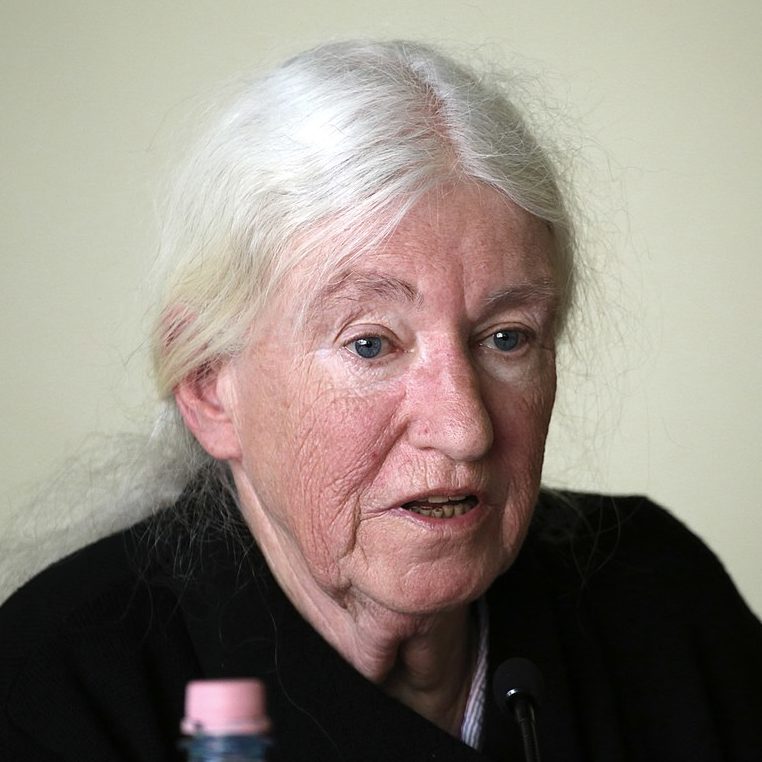
Frigga Haug taught as a Professor for Sociology at Hamburg University for Economy and Politics. Her visiting professorships led her to Copenhagen, Klagenfurt, Innsbruck Sydney, Toronto and Durham. She is co-editor and member of the editorial board of the journal, Das Argument, and of the Historical-Critical Dictionary of Marxism, also of the Forum Kritische Psychologie, chairwoman of the Berlin Institute of Critical Theory (InkriT), member of the scientifi c advisory board of attac, on the board of trustees of the Institute Solidarische Moderne, in the Verband deutscher Schriftsteller and in the Party Die Linke. In 2013 she was awarded the Clara-Zetkin-Prize, in 2016 an honorary doctor’s degree of the University of Roskilde. Beside writings on labour studies, she has published on women’s socialization and politics, on social science methods, on learning, on memory work, on Rosa Luxemburg and on the current project of an international left feminism, including: Briefe aus der Ferne. Anforderungen an ein linkes feministisches Projekt (ed., 2010); The Four-in-One-Perspective (3. Edition, 2011); Rosa Luxemburg und die Kunst der Politik (2007). Since 2003 she has been editing the Historical-Critical Dictionary of Feminism (until now Vol. 1–3 have been published). In her new book, Marxismus- Feminismus, she develops a Marxist-feminist politics that combines theoretical insights with everyday life and cultural practice. Her approach is autobiographical: based on her own theses and intellectual struggles she shows how assumed certainties interfere with both theoretical awareness and practical politics.
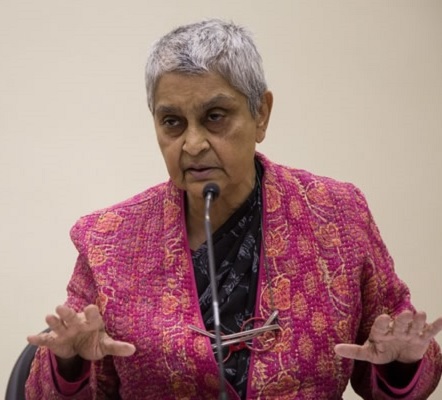
Spivak
Gayatri Chakraborty Spivak is a university professor, and a founding member of the Institute for Comparative Literature and Society at Columbia University in New York. She is director at elementary schools in Rashpur, Baidyanathpur, Langulia, Haripur, Tabadumra, and Shahabad near the Birbhum-Jharrkhand border where she also facilitates the will for a farmers’ cooperative not imposed by benevolent feudal leaders. She has received honorary doctorates from the Universities of Toronto (1999), London (2003), Oberlin College (2008), Universitat Roveri I Virgili (2011), Rabindra Bharati (2012), Universidad Nacional de San Martin (2013), Universities of St. Andrews (2014) and Paris VIII (2014), forthcoming of Presidency University. In 2012 she was awarded the Kyoto Prize in Thought and Ethics and in 2013 the Padma Bhushan. Among her books: In Other Worlds: Essays in Cultural Politics (1987, 2002); Outside in the Teaching Machine (1993, 2003); A Critique of Postcolonial Reason: Towards a History of the Vanishing Present (1999); Song for Kali: A Cycle (translation with introduction of Ramproshad Sen, 2000); Death of a Discipline (2003); Other Asias (2005); An Aesthetic Education in the Age of Globalization (2012); Readings (2014); Du Bois and the General Strike (forthcoming). Significant articles, published in numerous journals or books and languages: »Subaltern Studies: Deconstructing Historiography« (1985); »Three Women’s Texts and a Critique of Imperialism « (1985); »Can the Subaltern Speak?« (1988); »The Politics of Translation« (1992); »Moving Devi« (1999); »Righting Wrongs« (2003); »Ethics and Politics in Tagore, Coetzee, and Certain Scenes of Teaching« (2004); »Translating into English« (2005); »Rethinking Comparativism« (2010); »A Borderless World« (2011); »General Strike« (2012); »Crimes of Identity« (2014); »Our World« (2014).
Frigga Haug lehrte als Professorin für Soziologie an der Hamburger Universität für Wirtschaft und Politik. Gastprofessuren führten sie nach Kopenhagen, Klagenfurt, Innsbruck, Sydney, Toronto und Durham. Sie ist Mitherausgeberin und Redakteurin der Zeitschrift Das Argument und des Historisch-Kritischen Wörterbuchs des Marxismus, Redakteurin des Forums Kritische Psychologie, Vorsitzende des Berliner Instituts für kritische Theorie (InKriT), Mitglied im wissenschaftlichen Beirat von Attac, im Kuratorium des Instituts Solidarische Moderne, im Verband deutscher Schriftsteller und in der Partei Die Linke. 2013 erhielt sie den Clara-Zetkin-Preis, im September 2016 die Ehrendoktorwürde der Universität Roskilde. Neben Schriften zur Arbeitsforschung veröffentlichte sie zu Frauensozialisation und Politik, zu sozialwissenschaftlichen Methoden, zum Lernen, zur Erinnerungsarbeit, zu Rosa Luxemburg und zum aktuellen Projekt eines internationalen linken Feminismus, darunter: Briefe aus der Ferne: Anforderungen an ein linkes feministisches Projekt heute (Hg., 2010); Die Vier-in-einem-Perspektive (3. Aufl., 2011); Rosa Luxemburg und die Kunst der Politik (2007). Seit 2003 gibt sie das Historisch-kritische Wörterbuch des Feminismus heraus (bisher erschienen Bd. 1-3). In ihrem neuen Buch Marxismus-Feminismus erarbeitete sie eine marxistisch-feministische Politik, die theoretische Erkenntnisse mit Alltagsleben und kultureller Praxis verknüpft. Sie geht autobiografisch vor: An ihren eigenen Thesen und intellektuellen Kämpfen zeigt sie, wie übernommene Gewissheiten theoretische Erkenntnis wie praktische Politik behindern.
Spivak
Gayatri Chakraborty Spivak ist Professorin und Gründungsmitglied des Instituts für Vergleichende Literaturwissenschaft und Gesellschaft der Columbia Universität in New York City. Sie ist Direktorin der Grundschulen in Rashpur, Baidyanathpur, Langulia, Haripur, Tabadumra und Shahabad in der Nähe der Birbhum- Jharrkhand-Grenze, wo sie darüber hinaus das Vorhaben einer Bauern-Kooperative, die nicht von der Milde der Feudalherren abhängig ist, fördert. Sie erhielt Ehrendoktorwürden von den Universitäten von Toronto (1999), London (2003), Oberlin College (2008), Universitat Roveri I Virgili (2011), Rabindra Bharati (2012), Universidad Nacional de San Martin (2013), den Universitäten von St. Andrews (2014) und Paris VIII (2014), sowie demnächst der Presidency University. Sie erhielt 2012 den Kyoto Preis in Thought and Ethics und 2013 den Padma Bhushan. Einige ihrer Bücher sind: In Other Worlds: Essays in Cultural Politics (1987, 2002); Outside in the Teaching Machine (1993, 2003); A Critique of Postcolonial Reason: Towards a History of the Vanishing Present (1999); Song for Kali: A Cycle (Übersetzt und mit einer Einleitung von Ramproshad Sen, 2000); Death of a Discipline (2003); Other Asias (2005); An Aesthetic Education in the Age of Globalization (2012); Readings (2014); Du Bois and the General Strike (im Erscheinen).