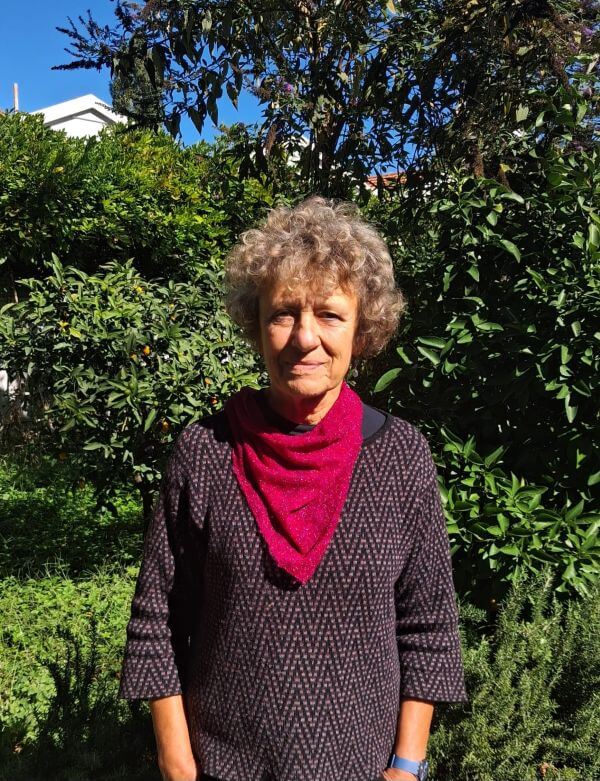
Nadia De Mond was born in Antwerp (Belgium) on 8 June 1954, graduated in moral philosophy from the VUB (Free University Brussels) in 1977 and moved to Milan, Italy, in 1981.
She started her professional carrer as philosophy teacher in secondaru schools in Belgium (1978-1981) and as teahcer of French language for adults in Italy (1982-1989). From April to October 1989 worked as correspondent for Quetzal magazin, in El Salvador. From 1990 to 2010, Nadia De Mond worked as Project Manager for Latin America International Cooperation Officer at the NGO Mani Tese and with an expertise on gender issues. Since 2010, has been a teacher of Italian for migrant women at the non-profit organisation “Alfabeti” and at the “Scuola di italiano per donne migranti Francesca Amoni” at the Casa delle Donne (Women’s House) in Milan.
As a feminist shcolar and activist, Nadia de Mond’s activities include a role as editor of the Marxist feminist series of magazines “Quaderni viola” 1990-1999, founder in Italy of the World March of Women against violence and poverty, and member of its International Committee from 2002 to 2008. Nadia was also representative of the World March of Women in the Italian, European and World Social Forum.
Also, Nadia is member of the International working group of the Casa delle Donne (Women’s House) since 2014, participates in the Non Una di Meno movement since 2016 and was member of the board of the Women’s House in Milan from 2020 to 2023.
Further, Nadia De Mond is lecturer at the International Institute for Research and Education (Amsterdam) on gender issues, women’s movements and feminism and member of the IIRE Board from 2023 to 2025.
Nadia De Mond has also been an activist in international solidarity movements in Latin America, namely as organizer (e.g. of work brigades) of the Italy-Nicaragua Association and the El Salvador Solidarity Committee in the 1980s, as editor of the magazines ‘Quetzal, per la liberazione dell’America Latina’ (Quetzal, for the liberation of Latin America) and ‘Ixquic, donna in Centroamerica’ (Ixquic, women in Central America) 1985-1994 and as organiser of study trips and exchange programmes for representatives of the peasant movement Genuino Clandestino and Fuorimercato – selfmanaged workers movement, with the Movimento Sem Terra (Landless workers movement) in Brazil and the SAT/SOC (trade union) in Andalusia in 2016 and 2017.